Nouns in English: A Comprehensive Guide
Nouns are one of the most important parts of speech in the English language. They denote people, animals, things, places, ideas, or feelings. They are the foundation of sentences and allow us to clearly express thoughts and describe the world around us.
In English grammar, nouns have various properties, such as countability, gender, number, or case function. Nouns can be divided into several categories.
Common vs. Proper Nouns
Among the most basic are common nouns, which denote ordinary things (dog, city, car), and proper nouns, which denote specific names of people, places, or institutions (London, John, Amazon). Proper nouns are always capitalized in English. This division helps us more accurately determine what type of noun it is and how to properly use it in a sentence.
For example:
- Common Nouns: dog, city, car
- Proper Nouns: London, John, Amazon
Countable vs. Uncountable Nouns
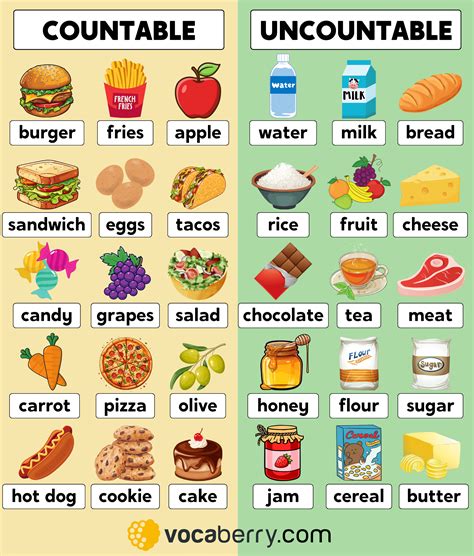
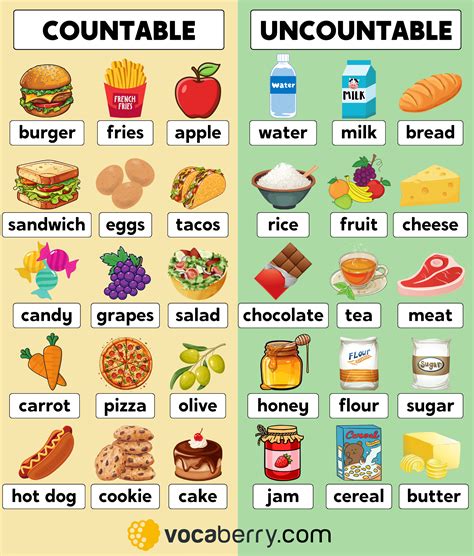
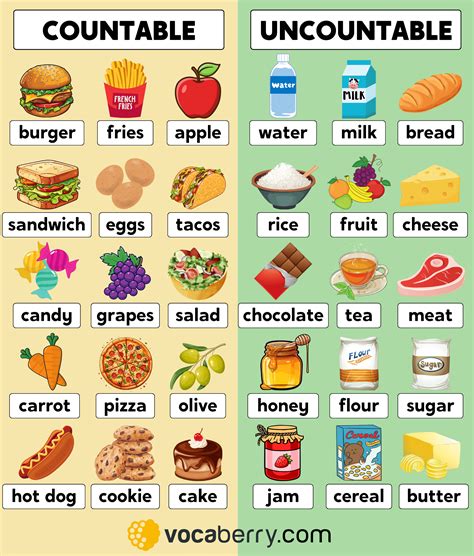
Another important division is into countable nouns and uncountable nouns. Countable nouns can be expressed in both singular and plural forms (apple - apples), while uncountable nouns denote substances or abstract concepts and do not commonly occur in the plural form (water, information). The distinction between these types also affects the use of articles and expressions for quantity. Correctly determining countability is crucial, for example, when choosing the articles "a", "an", or "some".
Péct chleba: Výběr správné mouky
For example:
- Countable Nouns: apple - apples
- Uncountable Nouns: water, information
Grammatical Functions of Nouns
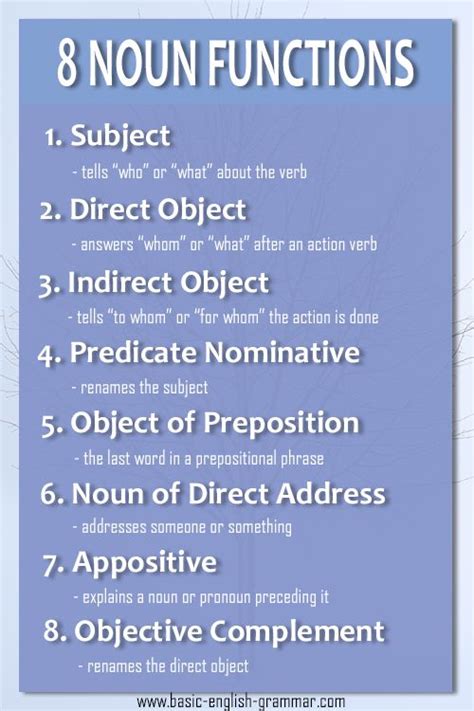
Nouns can perform various grammatical functions in English sentences. Most often, they appear as the subject of a sentence (The cat is sleeping. - Kočka spí.) or as the object of a verb (She likes music. - Má ráda hudbu.). In addition, they can occur in conjunction with adjectives or in possessive relationships (my brother’s car - auto mého bratra). Thanks to these functions, nouns play a fundamental role in sentence construction and understanding its meaning.
For example:
- Subject: The cat is sleeping.
- Object: She likes music.
- Possessive: my brother’s car
Thanks to their wide range of uses, nouns are an indispensable part of English grammar. Their correct usage helps in creating understandable sentences and effective communication. Understanding the different types of nouns and their grammatical properties is key to fluent and accurate English conversation. Mastering these rules significantly improves language skills and confidence in both speaking and writing.
Knowledge of countable nouns is essential for the correct formation of sentences, both in basic communication and in more advanced language situations. Being able to correctly distinguish between countable and uncountable nouns helps students better understand English grammar and avoid common mistakes. Acquiring these differences increases language confidence and fluency of expression.
Jaké maso je nejlepší při dietě?
Countable Nouns in Detail
Countable nouns denote things that can be counted individually. These include words like "apple", "chair", "book" or "pen". It is possible to determine the exact number for these words - that is, to say "one book", "two chairs", "three apples", etc. This type of noun is very common and often occurs in everyday conversation.
Each countable noun in English has a form for the singular number - singular and a form for the plural number - plural. Most nouns form the plural by adding the ending "-s" or "-es" e.g. "dog - dogs", "bus - buses". However, some words undergo an irregular change "child - children", "man - men". Irregular plural numbers need to be remembered because they do not follow the usual rules.
Countable nouns in the singular are usually used with the indefinite article "a" or "an" - "a cat", "an apple". In the plural, numbers are often used "three books" or indefinite pronouns "many chairs", "a few pens", depending on the context and the degree of accuracy we want to express. Correct use of articles and numerals helps to formulate the message more precisely. The choice of articles and numerals depends not only on grammar, but also on what we want to emphasize.
When forming questions or negatives with countable nouns, we often use expressions such as "how many", "any", "some", etc. For example: "Do you have any pencils?" or "I don’t have any coins." These expressions enable effective communication and asking specific questions. The use of these expressions also helps to distinguish whether it is a general question, a negative statement, or an affirmative statement with an indefinite quantity.
Examples:
Češi a maso: co nejvíce kupujeme?
- I have a book.
- She saw an elephant.
- I have two books.
- There are many chairs in the room.
Uncountable Nouns in Detail
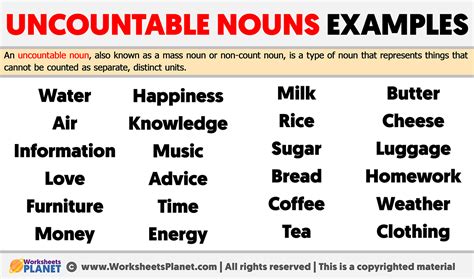
Uncountable nouns denote substances, abstract concepts, or things that we do not normally count as individual units. These include, for example, "water", "sugar", "information", "advice" or "furniture". These nouns denote something that does not have a natural division into countable parts. Their meaning is often collective or indefinite, which makes it impossible to express the quantity by the number of pieces.
Unlike countable nouns, uncountable nouns do not have a plural form. Thus, it is not possible to say "informations" or "waters" (exceptions are special meanings, e.g. the waters of the lake). They are always used in the singular and require the singular form of the verb (The information is useful. - Tyto informace jsou užitečné).
When using these words, it is important to pay attention to the correct subject-verb agreement. To express quantity with uncountable nouns, we use expressions such as "some", "much", "a lot of", "a little" or specific units of measure. For example: "some milk", "a little sugar", "a glass of water", "two pieces of advice". These expressions help to determine the quantity without having to convert the word to the plural.
In these cases, it is common to use so-called quantifiers, i.e. quantitative expressions that complement the meaning. In questions and negatives, "any" or "much" is usually used: "Do you have any bread?", "There isn’t much time." In affirmative sentences, "some" or "a lot of" often appears, for example: "We need some rice.". The choice of a particular expression depends on the type of sentence and on whether the speaker expects a positive or negative answer.
Understanding these expressions simplifies the creation of questions and answers in everyday conversation. Knowledge of the difference between countable and uncountable nouns is essential for the correct use of articles, pronouns, and verbs. Correct handling of uncountable names helps to create grammatically correct and natural-sounding sentences in English, and to avoid common mistakes that can change the meaning of the message. Acquiring these differences significantly contributes to better understanding and one’s own expression in English.
Examples of common mistakes and their corrections:
- I need a water. → I need some water.
- Informations are important. → Information is important.
Nouns with Dual Countability
In English, there is a group of nouns that can be both countable and uncountable, with their meaning changing depending on the context. These words have a special status in grammar, because their use depends not only on the form, but mainly on what we want to express. They can be confusing for English students, as they often correspond to only one meaning in Czech.
A typical example is the word "glass", which can refer to a material, but also to a specific object. In the uncountable sense, these nouns usually denote a substance or material as a whole. For example, the word "glass" can mean "glass" as a material from which windows or bottles are made. In this case, it does not have a plural number and is not used with the indefinite article, for example: "Glass is fragile." Similarly, words like "wood" or "iron" work if we are talking about the material in general. This method of use is common in professional or descriptive texts.
If the same nouns are used as countable, they denote specific objects or individual pieces. The word a "glass" then means one "glass", i.e. a clearly defined object that can be counted. We can say, for example: "I drank two glasses of water." In this meaning, both singular and plural numbers are commonly used, as well as the indefinite article. This type of use often appears in everyday communication.
A similar difference in meaning can be found in other words, for example "paper" (paper as a material × newspaper or document), "chicken" (chicken meat × chicken as an animal) or "experience" (experience in general × specific experience). The change in countability is therefore often related to a change in meaning, not only to a grammatical rule. It is this shift in meaning that is key to correct use. Students learn these differences best on specific examples.
Understanding nouns that can be countable and uncountable helps students express themselves more accurately and naturally. It allows them to correctly use articles, plural numbers, and expressions of quantity. Thanks to this, they avoid common mistakes and better understand how English works with meaning and context. This knowledge is important both in writing and in speaking. Gradually, it becomes a natural part of language expression.
Examples:
- Can I have a glass of water?
- The window is made of glass.
- I found a hair in my soup!
- Her hair is beautiful.
- I need three papers for my project.
- Did you read the papers this morning?
- This letter is written on special paper.
- I've been there three times.
- We don't have much time left.
- That trip was an amazing experience.
- She has a lot of marketing experience.
Plural-Only Nouns
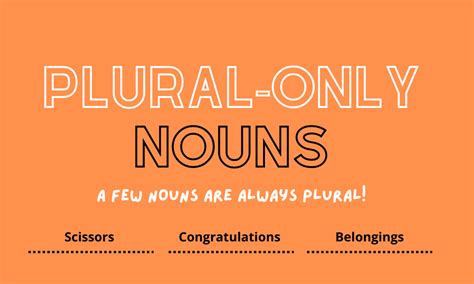
In English, there is a group of nouns that are used only in the plural, even though they may denote one object. These words are called plural-only nouns and have a special status in grammar. They cannot be used in the singular and are always combined with a verb in the plural. They can be confusing for English students at first, because they often correspond to nouns in the singular in Czech.
Among the most common plural-only nouns are the names of objects that consist of two parts. Typical examples are "trousers", "jeans", "shorts" or "glasses". Even if we are talking about one piece of clothing or one tool, in English we must use the plural. For example, we say "These trousers are new.", not "This trouser is new.".
Another group consists of nouns denoting abstract concepts or activities, such as "clothes", "thanks" or "congratulations". These words also do not have a singular form and always behave as plural. For example, the sentence "Thanks are not enough." uses the verb in the plural, even though it expresses one whole in meaning. Correct use of these expressions is important for natural expression.
We use the word "congratulations" when congratulating, for example: "Congratulations on your graduation!". An interesting group is the names of some games and sports, such as "darts" or "billiards". These expressions also have only the plural, although they denote one activity. The sentence "Darts is popular in England." can confuse students, because here the verb is often used in the singular due to the understanding of the sport as a whole, which shows that there are also exceptions and subtle differences in use.
The word "billiards" also refers to the game as a whole, not individual balls or tables. If we want to express the quantity or one piece of plural-only nouns, we use auxiliary expressions such as "a pair of". For example, instead of the non-existent a "trouser" we say "a pair of trousers". This way of expressing oneself is very important for proper communication.
Understanding nouns that exist only in the plural helps students improve grammatical accuracy and overall understanding of English. We can also say "two pairs of shorts" for more pieces of clothing.

