Mastering Choux Pastry: A Comprehensive Guide to Choux au Craquelin
French pastry is, for many, a symbol of elegance, ingenuity, and the perfect combination of flavors. In addition to such mainstays as macarons or mille-feuille, in recent years, one dough has come to the fore, which you may know as "choux." However, not all choux are created equal. Currently, the so-called "choux au craquelin" is particularly popular - a small dessert that is gaining admiration not only for its taste but, above all, for its texture and appearance.
The word "choux" (pronounced "shoo") literally means "cabbage" - the name refers to the shape of small round balls, which rise during baking and resemble heads of cabbage. The technique of making choux dough, also known as scalded dough, has been used in the kitchen since the 16th century. In terms of ingredients, it is very simple - water, butter, flour, eggs - and yet dozens of variations can be created from it.
While classic choux pastries are known for their lightness, their surface is irregular and cracked. And that's what French confectioners decided to change when they started making choux au craquelin. This sophisticated dessert combines traditional scalded dough with a thin layer of butter crumble (so-called craquelin).
Choux dough is first prepared on the stove by mixing the flour into a boiling mixture of water and butter. The subsequent addition of eggs creates a smooth, glossy mass that is baked at a high temperature. The drobenka melts at temperature and creates a fine, crispy crust during baking, reminiscent of a biscuit surface. Thanks to this, choux au craquelin are not only tastier but also visually more attractive - perfectly round with an evenly cracked pattern.
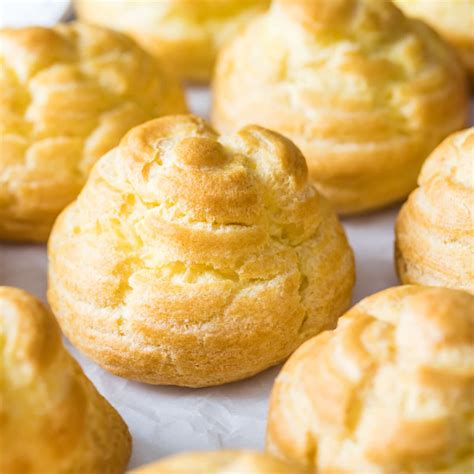
Ingredients for Perfect Choux Pastry
Here's a breakdown of the ingredients you'll need to create these delightful treats:
Dokonalé věnečky a profiterolky
- For Choux Pastry:
- 120 g whole milk
- 100 g butter
- 14 g granulated sugar
- 4 g salt
- 215 g all-purpose flour
- 250 - 275 g eggs (about 5 pieces)
- For Poppy Seed Crispy Layer:
- 50 g all-purpose flour
- 12 g whole poppy seeds
- 65 g granulated sugar
- 50 g cold butter
- For Coffee Chocolate Cream:
- 110 g milk chocolate (chopped)
- 75 g 40% whipping cream
- 15 g prepared espresso
- 8 g Caribbean rum (optional)
- For Coffee Diplomat Cream:
- 60 g pudding powder
- 8 g vanilla sugar
- 92 g granulated sugar
- 1 egg and 1 egg yolk
- 500 ml milk
- 50 g room temperature butter
- 40 ml prepared espresso
- 3 teaspoons instant coffee (optional)
- 300 g 40% whipping cream
- 3 teaspoons powdered sugar
Step-by-Step Instructions
Choux Pastry
- In a pot, mix 135 g of water, milk, butter, sugar, and salt and bring to a boil. Remove from heat and stir in the flour. Return to the stove and stir on low to medium heat (it requires strength and persistence) for about 2-3 minutes until the dough is smooth and compact and a film is attached to the bottom of the pot (but not burnt). The dough should look like a dense smooth mashed potato.
- Transfer to a mixing bowl and with a flat beater, mix on low speed for a few minutes until slightly cooled (it should not be hot, but still warm).
- Then mix in the eggs one by one. The resulting dough should have a creamy consistency. We need it to hold its shape on the baking sheet - so be careful with the last egg, observe how the dough looks after the 4th egg and if necessary, add only part of the beaten 5th egg. Conversely, if the dough is too thick, feel free to thin it with a little water (if you don't have any unused cracked egg on hand).
- Cover the dough with plastic wrap to prevent it from drying out (it must touch the surface) and let it cool.
- Quickly mix the ingredients for the poppy seed layer in a bowl with your hands and place in the fridge for 10 minutes. Then roll out a sheet 2-3 mm thick between two sheets of baking paper and place back in the fridge.
- Put the choux pastry into a piping bag with a round tip (0.8-1 cm). Pipe shapes of biscuits with a diameter of 4 cm onto baking paper (use pre-drawn circles with sufficient spacing, at least 3 cm apart).
- Remove the poppy seed dough and cut out 4 cm circles, which you place on top of the choux pastries (you can put the dough back in the freezer as needed, it makes it easier to work with).
- Place in an oven preheated to 230˚C (top and bottom heat) and immediately reduce the temperature to 190 degrees. Bake for about 15 minutes, then reduce the temperature to 170 degrees and bake until golden brown (about 15-18 minutes). Do not open the oven during baking. It is really important to let the moisture escape from the choux pastries, so watch the color of the pastries and leave them in long enough (they must be golden brown, not too light). It's better to let the pastries dry in the open oven after opening. If you take them out too soon, they will collapse.
Coffee Chocolate Cream
- Bring the cream with espresso to a boil. Stir in the rum if you are adding it to the cream, and pour over the chopped chocolate in a bowl. Let it sit for about 1 minute and then stir until smooth. Let it cool (feel free to put it in a piping bag or cover it in a bowl with plastic wrap and place in the fridge).
Diplomat Cream
- Mix the pudding powder, sugar, and egg yolk with the egg in a stainless steel bowl with a whisk until smooth. Bring the milk to a boil over medium heat and remove from heat. Stir about half of the milk into the pudding mixture and pour back into the remaining milk. Return to the stove and bring to a boil over low heat, stirring constantly, and stir intensively for about 2 minutes. Remove from heat and stir in the butter with an immersion blender. Cover with plastic wrap so it touches the surface and place in the fridge to cool to room temperature.
- Brew espresso and dissolve instant coffee in it (the more instant coffee you add, the more intense the coffee flavor of the cream will be). Let it cool to room temperature and then whisk it into the vanilla cream.
- Whip the cream with powdered sugar until stiff and fold it into the coffee base with a spatula.
- Place in a piping bag with a star tip and refrigerate (if you don't have a star tip or don't want to decorate that way, feel free to scoop the cream with an ice cream scoop or spoon).
Assembling the Choux Pastries
- Trim the tops of the choux pastry shells. Place the coffee chocolate cream at the bottom and pipe the coffee diplomat cream on top with a piping bag with a star tip. Cover with the top of the choux pastry and it's done.
Tip: There are about a third more choux pastries than filling.
On the face of it, a choux recipe may seem complicated, but with a little patience and quality ingredients, anyone can prepare it. The key is to follow the basic proportions and procedure. For choux au craquelin, it is also necessary to add the preparation of the crumble layer: mix butter, sugar and flour into a smooth dough, roll out into a thin sheet and cut out circles, which you place on the raw choux.
In real life, Tereza from Brno coped with this recipe, for example, who opened a small home business producing French desserts during the pandemic. She started with macarons, but choux au craquelin brought her the most clients. "People are amazed by the look, but especially by the fact that it is not oversweetened."
The appeal of choux desserts lies in their variability. The dough is neutral and suitable for both sweet and savory variations. Confectioners thus have a free field of activity when it comes to fillings and decorations. In addition, people today are increasingly appreciating quality and artisanal products, and choux is exactly the type of dessert that shows the confectioner's skill.
Unlike cakes, which can be easily baked in advance, choux is best fresh. One ball is an ideal portion - enough to enjoy, but not so much that you feel guilty. And so the inconspicuous dough, which originated centuries ago in the kitchens of French court chefs, is today once again enjoying interest as one of the most versatile and impressive confectionery works.
Perhaps precisely because it combines simplicity with precision. Who could resist a small piece of France that crunches between your teeth and then melts on your tongue?
Cream Puffs (In-depth Guide to Pate a Choux and Pastry Cream)
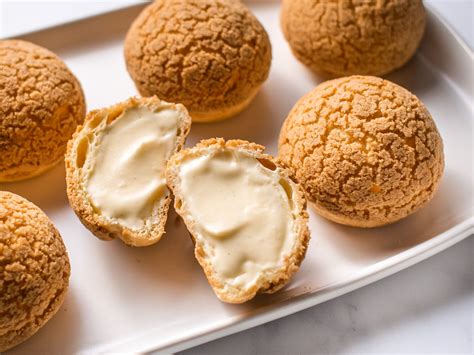
Choux have become almost a viral phenomenon on social media. Hashtags like #chouxpastry or #chouxaucraquelin have hundreds of thousands of posts on Instagram. Even though France remains the home of choux culture, these desserts are now commonly found on menus in global metropolises. In Tokyo, you can find them in minimalist packages with flavors like black sesame. In London, they are served as mini desserts in combination with earl grey cream.
Here is a table summarizing the key steps and considerations for making choux pastry:
| Step | Description | Key Considerations |
|---|---|---|
| Dough Preparation | Mixing water, milk, butter, sugar, and salt, then adding flour and eggs. | Ensure dough is smooth and compact, with a creamy consistency. |
| Poppy Seed Layer | Mixing flour, poppy seeds, sugar, and butter, then rolling it out. | Keep the dough cold for easier handling. |
| Piping and Assembly | Piping choux pastry onto baking paper and placing poppy seed circles on top. | Maintain sufficient spacing between pastries. |
| Baking | Baking at high temperature initially, then reducing to allow moisture to escape. | Do not open the oven during baking to prevent collapsing. |
| Cream Preparation | Preparing coffee chocolate cream and coffee diplomat cream. | Cool creams thoroughly before assembling. |
| Assembly | Trimming choux pastry shells and filling with creams. | Use a piping bag for neat and attractive presentation. |

